
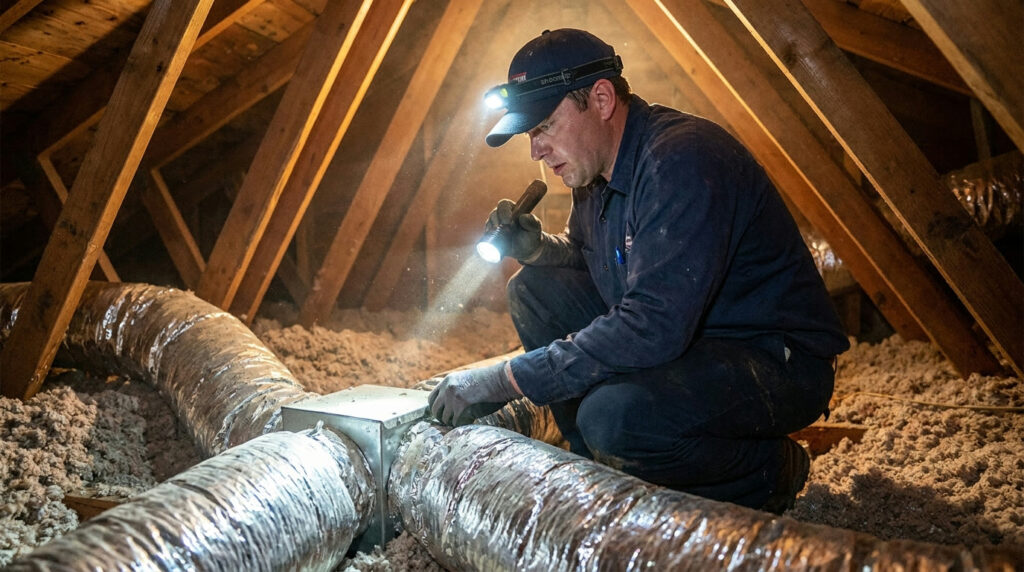
Ductwork repair in DFW is the most overlooked fix in home cooling. The U.S. Department of Energy estimates the typical home loses 20–30% of conditioned air through duct leaks — and in North Texas, those ducts run through attics that hit 140°F+ all summer. Every leak pulls superheated attic air toward your living space while your paid-for cool air blows into the insulation. This guide covers the warning signs, the real cost of doing nothing, and what professional repair involves.
Why Texas attics destroy ductwork
Most DFW homes run flexible duct through the attic — the hottest, most hostile space in the house. Summer attic temperatures of 130–150°F bake the duct’s outer jacket and dry out the mastic and tape at every joint. Add a decade of thermal expansion cycles, the occasional cable installer crawling over runs, and rodents looking for cool air, and the result is predictable:
- Separated joints where flex duct pulls away from metal collars and plenums.
- Crushed or kinked runs that choke airflow to the rooms farthest from the unit.
- Cracked, brittle tape on older metal duct — builder-grade cloth duct tape fails in just a few Texas summers.
- Torn outer jackets exposing insulation, sweating in humid air, and bleeding cold air into the attic.
Homes built before 2010 are prime candidates: duct standards were looser, and the materials have now spent 15+ summers in the oven.
6 signs you need ductwork repair in DFW
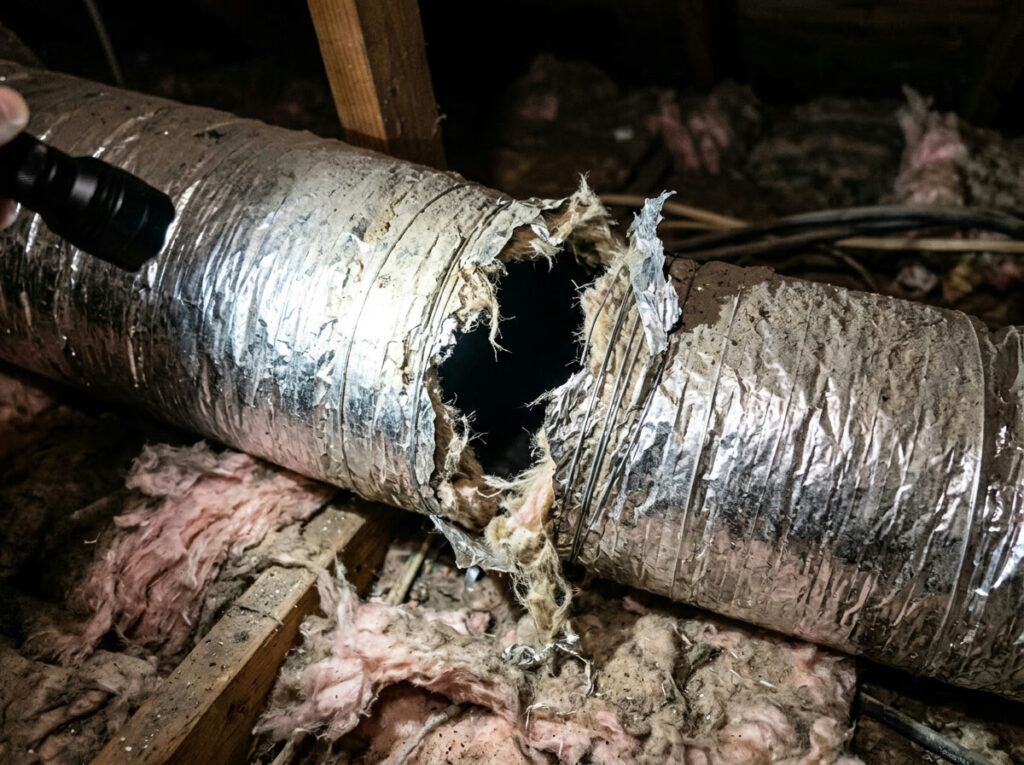
- Hot rooms that never catch up. One or two rooms always 4–8 degrees warmer than the thermostat is the classic leaky-or-crushed-duct signature.
- Electric bills that outpace your neighbors’. If your AC runs constantly but the house barely holds temperature, you may be cooling the attic.
- Weak airflow at the vents. Hold your hand to each supply register — a barely-there breeze on a healthy system points to leaks or restrictions upstream.
- Dust that comes back the day after you clean. Return-side leaks vacuum dusty, insulation-laden attic air into the system and distribute it through the house.
- Musty or “attic” smells when the AC kicks on. Air should smell like nothing. Odors mean the system is breathing from places it shouldn’t.
- Whistling or rumbling in walls and ceilings. Pressure escaping through gaps is literally audible once you know to listen for it.
Three or more signs? A professional diagnostic with a full duct inspection will show you exactly where the system is bleeding — before you spend anything on repairs.
What duct leaks cost you every summer
Run the math on a typical DFW cooling season. If your summer electric bills average $350/month from June through September and your ducts leak 25%, you are paying roughly $350 over the season to condition your attic — every year. Over the remaining life of the system, that is thousands of dollars for air you never feel.
The hidden costs are worse than the wasted electricity:
- Your AC ages faster. Leaks force longer run times and higher head pressures — the system works harder for less result, accelerating exactly the failures that lead to early replacement.
- Return leaks can freeze your coil. Pulling 140°F attic air into the return throws off the refrigerant balance and can ice the indoor coil — one of the most common “AC not cooling” calls we run in July.
- Air quality drops. Attic air carries insulation fibers, dust, and humidity into your ductwork and your lungs.
How professional ductwork repair works
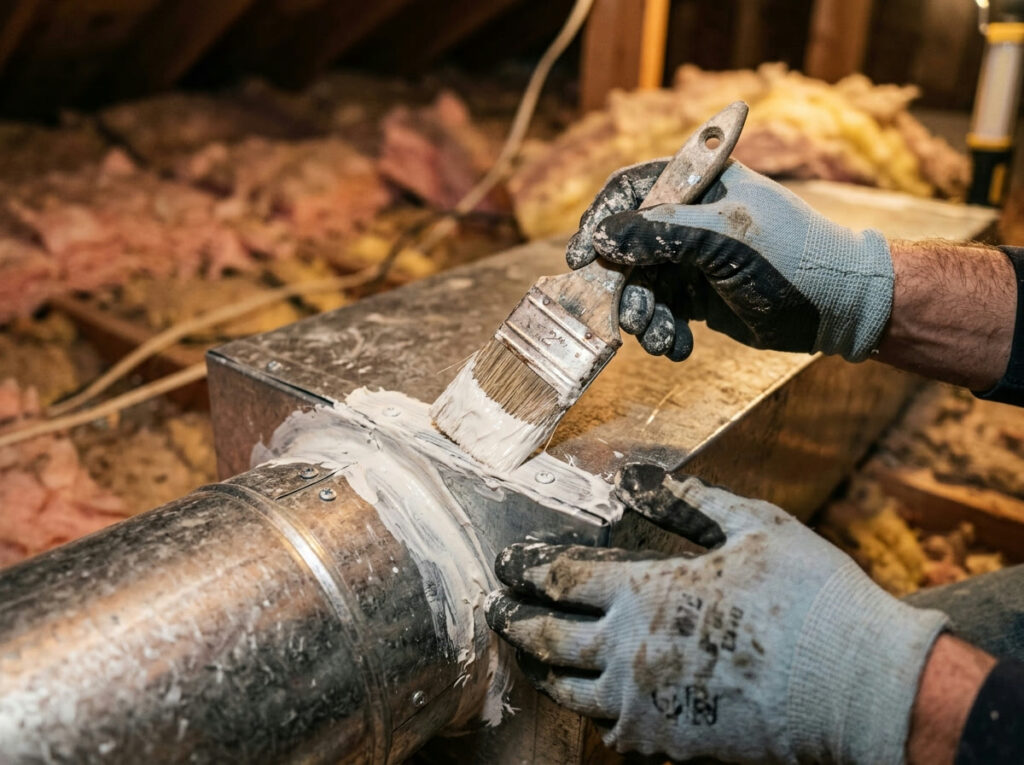
Real ductwork repair is measurement-driven, not guesswork:
- Inspection & testing: we walk the full attic run, check every joint, boot, and plenum connection, and measure airflow at each register to find what the eye misses.
- Sealing: joints and collars get mastic sealant or UL-181 foil tape — not cloth duct tape, which is ironically the one thing duct tape is bad at.
- Re-securing & re-supporting: separated joints are reconnected with proper clamps; sagging runs get supports so they cannot kink again.
- Section replacement: crushed, torn, or rodent-damaged sections are replaced with new insulated flex duct (R-8 in our climate).
- Verification: airflow is re-measured at the registers so you can see the before/after difference, not take our word for it.
Most targeted repairs are done in half a day, and the airflow difference in problem rooms is usually obvious the same afternoon.
Repair vs. replacement: which do you need?
Repair and seal when the duct layout is sound and damage is localized: a few separated joints, one crushed run, tape failure at connections. This is the majority of DFW homes and the best value per dollar.
Replace the duct system when the ducts are undersized for the equipment, the layout starves whole zones, the flex duct is 20+ years old and brittle throughout, or there is widespread rodent or moisture damage. Duct replacement is also the right moment to fix bad design — and if you are already planning an AC replacement, doing ducts at the same time protects the new system’s efficiency from day one.

Pair it with maintenance. Sealed ducts plus a seasonal tune-up is the cheapest combined upgrade in home comfort — see our HVAC maintenance guide for what a proper visit includes.
Frequently asked questions
How do I know if my air ducts are leaking?
How much does ductwork repair cost in DFW?
Can leaky ducts make my AC freeze up or fail?
How much can duct sealing save on my electric bill?
How long does ductwork repair take?
Find out where your cool air is going
Free estimate with a full duct inspection and register-by-register airflow check. Tori Air Solution serves Grand Prairie and the entire DFW metroplex.